
Lawn Grub Treatment Toowoomba | Lawn Pest Control & Recovery
Lawn Grub Treatment Toowoomba: The Complete Guide To Identifying, Treating & Preventing Lawn Grubs
Professional Lawn Grub Treatment Throughout Toowoomba
Have you noticed brown patches appearing in your lawn, sections of turf lifting easily from the soil, or birds suddenly spending more time pecking at your grass?
If so, lawn grubs may be the cause.
At 1st Class Lawn Care, we have provided hundreds of professional lawn grub treatment services throughout Toowoomba, helping homeowners identify, treat and recover from lawn grub infestations before significant damage occurs.
Lawn grubs are one of the most common causes of lawn decline throughout Toowoomba and are particularly active during seasonal transitions, especially during Autumn and Spring. Left untreated, lawn grubs can destroy large sections of healthy turf in a surprisingly short period of time.
This guide explains everything homeowners need to know about lawn grubs, including how to identify them, what damage they cause, how treatment works and how to restore a healthy lawn following an infestation.
What Are Lawn Grubs?
"Lawn grubs" is a general term used to describe several types of turf-damaging insects that feed on grass roots, stems or leaves.
The most common lawn pests encountered throughout Toowoomba include:
- Lawn Armyworm
- African Black Beetle larvae
- Sod Webworm
- Various turf caterpillars
- Other seasonal lawn-feeding insects
Although different pests cause slightly different symptoms, the end result is often the same:
- Brown patches
- Weak turf
- Thinning grass
- Dead areas
- Significant lawn damage
Because many lawn pests are active below the surface, homeowners often don't realise there is a problem until visible damage appears.
Why Lawn Grubs Are A Major Problem In Toowoomba
Toowoomba's climate creates ideal conditions for lawn grub activity.
Warm temperatures, seasonal rainfall and actively growing lawns provide excellent conditions for turf-feeding insects.
In our experience, grub activity typically increases during:
Early Autumn
As summer temperatures begin to ease, many lawn pests become highly active.
This is often when homeowners first notice:
- Discoloured patches
- Thinning turf
- Increased bird activity
- Areas that appear drought stressed despite adequate moisture
Early Spring
Spring is another high-risk period.
As lawns begin actively growing again, grub populations can increase rapidly and cause significant damage if left untreated.
Because of this seasonal pattern, we encourage homeowners to remain particularly vigilant during Autumn and Spring.
Signs Your Lawn May Have Grubs
One of the biggest challenges with lawn grubs is that many of the symptoms resemble other lawn problems.
The following signs often indicate grub activity.
Brown Or Yellow Patches
One of the most common symptoms.
Damaged areas often begin as small patches before expanding over time.
Turf Pulls Up Easily
Healthy grass should be firmly anchored.
If sections of lawn lift easily like loose carpet, root damage may have occurred.
Increased Bird Activity
Birds are often attracted to lawns containing grubs.
If birds are repeatedly pecking at your lawn, it may be worth investigating further.
Increased Orchard Wasp Activity
Another common sign of lawn grub activity throughout Toowoomba is the presence of Orchard Wasps.
Orchard Wasps are often seen flying low over the lawn, hovering close to the turf surface or repeatedly landing in the same areas of the lawn. While the wasps themselves are not damaging the grass, they are often searching for lawn grubs and other soil-dwelling insects beneath the surface.
Many homeowners first become aware of a potential lawn grub problem after noticing an increase in Orchard Wasp activity around their property.
Thinning Turf
Grub activity can weaken lawns and reduce density.
Areas That Don't Respond To Watering
Many homeowners assume their lawn needs more water.
However, if roots have been damaged, additional watering often has little effect.
Visible Insects Or Larvae
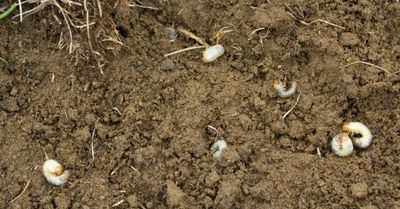
In some cases, grubs can be found just beneath the surface when affected areas are inspected.
Common Lawn Grub Damage We See Throughout Toowoomba
At 1st Class Lawn Care, we regularly inspect lawns throughout:
- East Toowoomba
- Middle Ridge
- Kearneys Spring
- Rangeville
- Centenary Heights
- Mount Lofty
- Prince Henry Heights
While every lawn is different, several damage patterns appear repeatedly.
East Toowoomba
Established lawns with mature landscaping can suffer root damage that is often mistaken for shade-related decline.
Middle Ridge
Premium lawns frequently show early signs through colour loss and reduced density.
Kearneys Spring
Family lawns often experience damage during periods of heavy use and seasonal stress.
Rangeville
Compacted lawns can sometimes mask grub activity until significant damage occurs.
Centenary Heights
Lawns may display irregular brown patches that gradually expand.
Mount Lofty
Premium properties often detect grub damage early because presentation standards are higher.
Prince Henry Heights
Larger lawns can allow infestations to spread unnoticed across substantial areas.
How We Treat Lawn Grubs
Professional lawn grub treatment involves more than simply applying a product and hoping for the best.
Step 1: Inspection
We assess:
- Lawn condition
- Damage patterns
- Seasonal factors
- Likely pest activity
Step 2: Identification
Different pests require different approaches.
Where possible, we identify the likely cause of damage before recommending treatment.
Step 3: Treatment
Appropriate lawn grub treatments are applied to target active pests and minimise further damage.
Step 4: Monitoring
We assess how the lawn responds following treatment.
Step 5: Recovery Planning
Where damage has occurred, additional lawn care may be recommended.
Can A Lawn Recover After Grub Damage?
In many cases, yes.
The extent of recovery depends on:
- Severity of damage
- Lawn variety
- Time of year
- Overall lawn health
- Speed of treatment
Minor infestations often recover relatively quickly once the pest issue is addressed.
More severe infestations may require additional lawn improvement work.
Lawn Recovery After Grubs
Once grub activity has been controlled, recovery becomes the next priority.
Depending on the severity of damage, recovery may involve:
Fertilising
Supporting healthy regrowth.
Lawn Care Programs
Providing ongoing nutrition and support.
Core Aeration
Improving root development and soil conditions.
Topdressing
Helping improve lawn health and surface quality.
Lawn Renovations
For severe damage, a renovation may provide the fastest path to recovery.
Lawn Grubs vs Drought Stress
One of the most common mistakes homeowners make is confusing grub damage with drought stress.
Drought stress usually improves after watering.
Grub damage often does not.
If a lawn continues declining despite irrigation or rainfall, a pest issue may be contributing to the problem.
This is why proper diagnosis is so important.
How To Reduce The Risk Of Future Grub Problems
No lawn is completely immune to pests.
However, healthy lawns are generally more resilient.
We recommend:
- Regular mowing
- Appropriate fertilising
- Lawn health programs
- Early inspections during Autumn
- Early inspections during Spring
- Prompt treatment when symptoms appear
- Prevention is far better than cure, we provide lawn grub prevention as part of our yearly package
The earlier an issue is identified, the easier it is to manage.
Frequently Asked Questions About Lawn Grubs
What Time Of Year Are Lawn Grubs Most Active In Toowoomba?
Typically during Autumn and Spring, although activity can vary depending on weather conditions.
Can Lawn Grubs Kill A Lawn?
Yes. Severe infestations can cause extensive damage if left untreated.
How Quickly Can Damage Occur?
In some cases, significant deterioration can occur within a matter of weeks.
Will Watering Fix Grub Damage?
No. Watering alone does not eliminate lawn grubs.
Can A Lawn Recover Naturally?
Minor damage may recover naturally, but severe infestations often require treatment and recovery work.
Are Lawn Grubs Common In Toowoomba?
Yes. Lawn grubs are one of the most common lawn health issues we encounter throughout the region.
Is Lawn Grub Treatment Safe For My Lawn?
When applied correctly, professional treatments are designed to target pests while supporting lawn recovery.
What Happens If I Ignore Lawn Grubs?
Damage often continues to worsen, potentially resulting in more extensive recovery work later.
Why Choose 1st Class Lawn Care?
At 1st Class Lawn Care, we specialise in helping homeowners throughout Toowoomba achieve healthier lawns through professional lawn care solutions.
Our services include:
- Lawn Mowing
- Lawn Care Programs
- Fertilising
- Weed Control
- Lawn Grub Treatments
- Core Aeration
- Dethatching
- Topdressing
- Lawn Renovations
We focus on premium lawn care throughout East Toowoomba, Middle Ridge, Kearneys Spring, Rangeville, Centenary Heights, Mount Lofty and Prince Henry Heights.
Because we regularly inspect lawns throughout these suburbs, we're familiar with the seasonal lawn issues affecting local homeowners and can provide practical recommendations tailored to local conditions.
Get A Quote For Lawn Grub Treatment In Toowoomba
If your lawn is developing brown patches, thinning out or showing signs of stress, lawn grubs may be responsible.
Early diagnosis and treatment can often prevent significant damage and reduce recovery time.
Contact 1st Class Lawn Care today to arrange a lawn inspection and learn more about professional lawn grub treatment services throughout Toowoomba.
Hours
Open today | 07:00 am – 07:00 pm |
lawn grubs toowoomba
Grubs Toowoomba
Blue Mountain Heights Centenary Heights Cotswold Hills
Cranley Darling Heights Drayton
East Toowoomba Glenvale Harlaxton
Harristown Kearneys Spring Middle Ridge
Mount Kynoch Mount Lofty Newtown
North Toowoomba Prince Henry Heights Rangeville
Redwood Rockville South Toowoomba
Toowoomba City Torrington Wilsonton
Wilsonton Heights
Copyright © 2026 1st Class Lawn Care - All Rights Reserved.
1st Class Lawn Care Operational Footprint
We provide premium regular lawn care, structural turf renovations, and technical soil management across Toowoomba, QLD 4350. Our scheduled maintenance routes—including Regular Premium Lawn Mowing and Specialised Regular Cylinder Mowing— are strictly consolidated within our seven core eastern and southern Toowoomba suburbs to maintain route density : East Toowoomba, Rangeville, Middle Ridge, Mount Lofty, Centenary Heights, Kearneys Spring and Prince Henry Heights. High-ticket structural turf renovations, vertimowing, and core aeration utilising our commercial Ryan Lawnaire 28 and Eco250 topdresser are available across the greater Toowoomba region (including Highfields, Glenvale, and Hodgson Vale), backed by mandatory pre-renovation soil pH testing. We create and maintain premium lawns. WE DON'T just cut grass.